
📷: Karapatan | FB
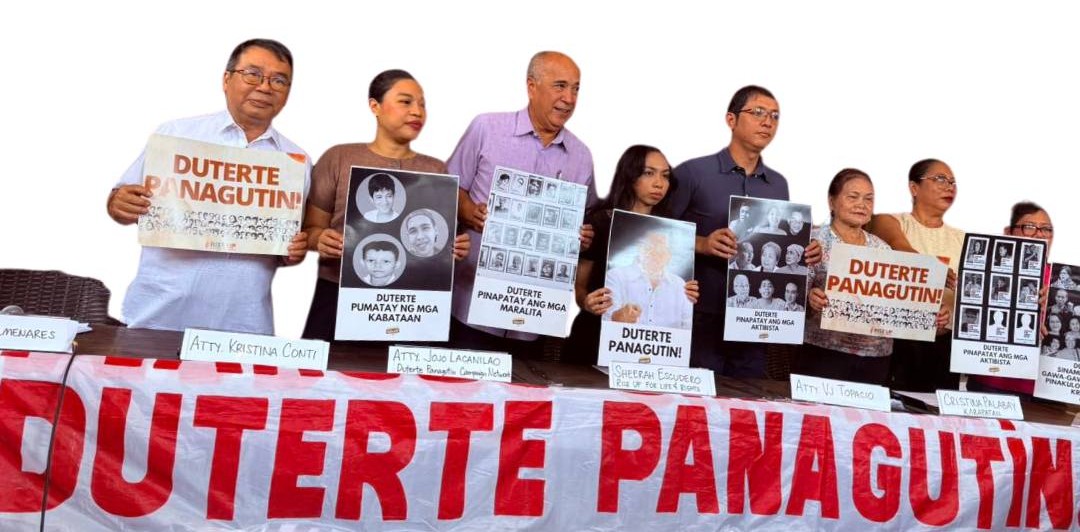
Iginiit ng human rights group na Karapatan at transitional justice expert na si Ruben Carranza na ang International Criminal Court (ICC) ang natitirang daan para sa hustisya ng mga biktima ng extrajudicial killings (EJKs), matapos mabigo ang lokal na sistema ng hustisya na panagutin ang mga responsable sa libo-libong pagkamatay sa ilalim ng drug war ng administrasyong Duterte.
“Families of victims of extrajudicial killings who are resolved in seeking for justice for their loved ones have exerted more than enough efforts to go after perpetrators in the Philippines. However, the good senators should be the ones to know that the justice system in the country failed the victims,” pahayag ng Karapatan.
Binanggit ng grupo na sa kabila ng libo-libong biktima ng drug war, iilan lamang ang umabot sa korte.
“DOJ secretary Jesus Crispin Remulla himself said that the local justice system is weak to prosecute Rodrigo Duterte,” dagdag ng Karapatan.
“Filing charges at the ICC is the victims’ last recourse in seeking justice. They have all the right and reason to hold accountable those who stripped them, and their killed relatives, of the right to due process, to life and to rights,” ayon pa sa grupo.
“We can only hope that the good senators also know that to support the victims is also to deny protection from those who were accessory and with direct involvement in the mass murder of Filipinos during the time of Duterte. Let them face the courts, because the victims killed were never given the chance to do so,” dagdag nito.
Samantala, sa panayam ng ANC, ipinaliwanag ni Carranza na may “very limited role” ang mga korte sa Pilipinas sa pag-review ng mga warrant of arrest o summons na maaaring ilabas laban sa mga akusado sa ICC.
“Philippine courts have a very limited role in reviewing the warrant of arrest or summons that maybe issued should against these eight other people primarily because there is a domestic law RA 9851 passed in 2009 which essentially domesticates the ICC Treaty,” aniya.
“Ibig sabihin, ginawang local law yung ICC Treaty. Ibig sabihin nun, Pilipinas kahit kasama sa ICC, may batas na pinapatupad niya kung ano ang mga krimen, kung ano ang patakaran ng ICC. Sa ilalim ng batas na iyan, nakalagay na puwedeng ipaubaya ng Pilipinas ang pag-prosecute at pag-imbestiga ng mga taong kinasuhan ng crimes against humanity, malinaw yan sa local na batas,” paliwanag ni Carranza.
“Hindi trabaho ng local courts, halimbawa sa Pilipinas, na rebyuhin yung buong kaso, rebyuhin kung may sapat bang katibayan o probable cause to issue a warrant,” paliwanag niya.
Binigyan diin ni Carranza, nananatili ang obligasyon ng Pilipinas na makipagtulungan sa ICC kahit umatras ito sa kasunduan.
“The Supreme Court has ruled previously a few years ago that the Philippines, even after it withdrew from the ICC, still has the obligation to cooperate with the ICC. Unless the Supreme Court revisits that and say, ‘We were wrong,’ which is very very unlikely, that will stand,” aniya.
“Rodrigo Duterte’s case really is trying to reverse that and I am very doubtful that the Supreme Court will reverse that,” dagdag pa niya. (ROSE NOVENARIO)